Insight · Construction
Building to specification in austere environments
How construction in Mogadishu and across Somalia can meet the client's specification, with materials, quality control and records planned from the start.
· 3 min read
Clients building in Somalia, whether for defense, government, humanitarian or commercial use, expect the finished facility to meet the same specification it would anywhere else. Austere conditions do not change the standard. They change how you reach it. Materials take longer to arrive, testing has to be planned locally and the site team must solve problems without waiting for help from abroad. In Mogadishu and across Somalia, building to specification is mostly a matter of planning and discipline.
Read the specification early
The specification should be reviewed in detail before procurement starts, not when the first delivery reaches site. Every material, product and test it calls for needs a source, a lead time and a method of proof. Where a specified product cannot be obtained in time, an equivalent should be proposed and approved in writing before it is ordered, not substituted quietly on site.
Control materials and workmanship
Material approvals are the first line of quality control. Samples, data sheets and test certificates are submitted to the client's engineer, and only approved materials are used. Deliveries are checked against the approved submittal before they are accepted.
Workmanship is controlled through inspection and test plans with defined hold points. Work does not proceed past a hold point until it has been inspected and signed off. Typical hold points include:
- Setting-out and levels before excavation
- Formation and foundations before concrete
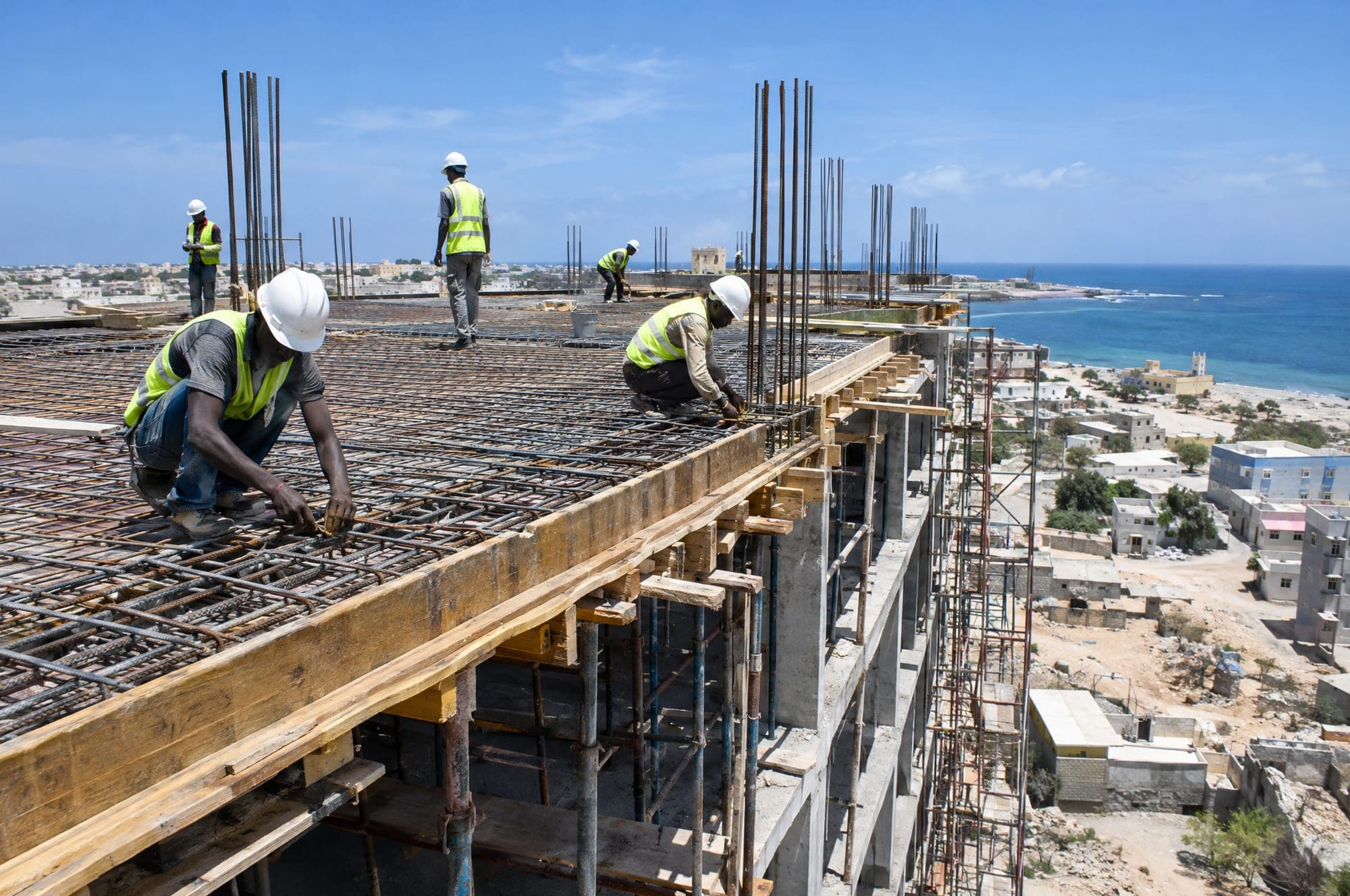
- Rebar and formwork before each pour
- Concealed MEP services before they are closed in
- Testing and commissioning before handover
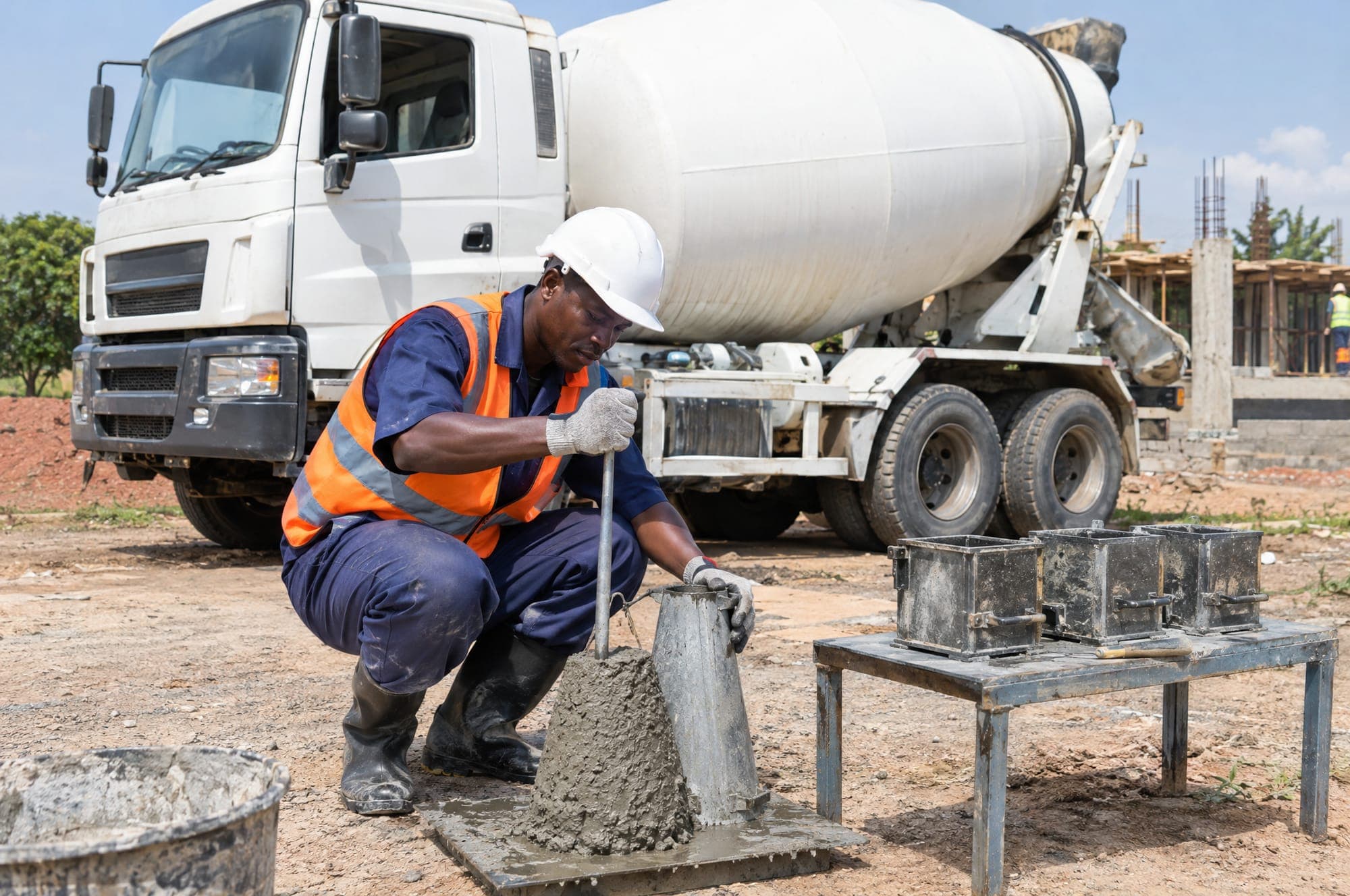
Producing concrete from our own batching plant gives direct control over one of the most important materials on any structure. Mix designs are agreed with the client's engineer, and each batch is recorded and sampled for testing.
Plan for the environment
Heat, dust, wind and seasonal rain affect both materials and people. Concrete placed in high temperatures needs a curing plan. Dust and sand get into equipment, finishes and electrical work. Working hours, rest breaks and water supply need to reflect the conditions, so that the crew can work safely and to standard through a full shift.
Security also shapes the program. Access to site, delivery times and the movement of workers may be restricted, so the schedule should allow for it rather than assume normal working patterns.
Records that prove the work
A building is only as good as the evidence behind it. As-built drawings, test results, inspection records and certificates should be compiled as the work proceeds and handed over at completion. For government and defense clients, these records are often as important as the building itself, because they support acceptance, audit and future maintenance.
Our construction teams work under a single project management office, with defined QA/QC hold points, survey-to-handover documentation and site-level HSE supervision. If you are planning a facility in Somalia, we can review your specification and show you how we would deliver it.