Insight · Construction
Protective works: T-walls, HESCO and secure perimeters
How protective works such as T-walls and HESCO barriers are planned and built for compounds and camps in Somalia, alongside the main construction.
· 3 min read
Many compounds, camps and bases in Somalia need protective works as part of their basic infrastructure. Concrete T-walls, HESCO-type barriers and controlled entry points define a secure perimeter and protect the people and equipment inside. These works are often treated as separate from the main construction, but they are most effective when planned together with the site layout from the start.
Start with the layout
The perimeter shapes everything inside it. Its line affects access roads, utilities, drainage and the space available for buildings. Gates and entry points need room for vehicle checks, turning and queuing without blocking the road outside. Guard towers need clear lines of sight. Planning these together avoids the common problem of a perimeter built first and a site that then has to fit around it.
The client's security requirements set the standard. The design of the perimeter, the stand-off from buildings and the type of barrier used should follow those requirements, and any changes should be agreed in writing.
T-walls
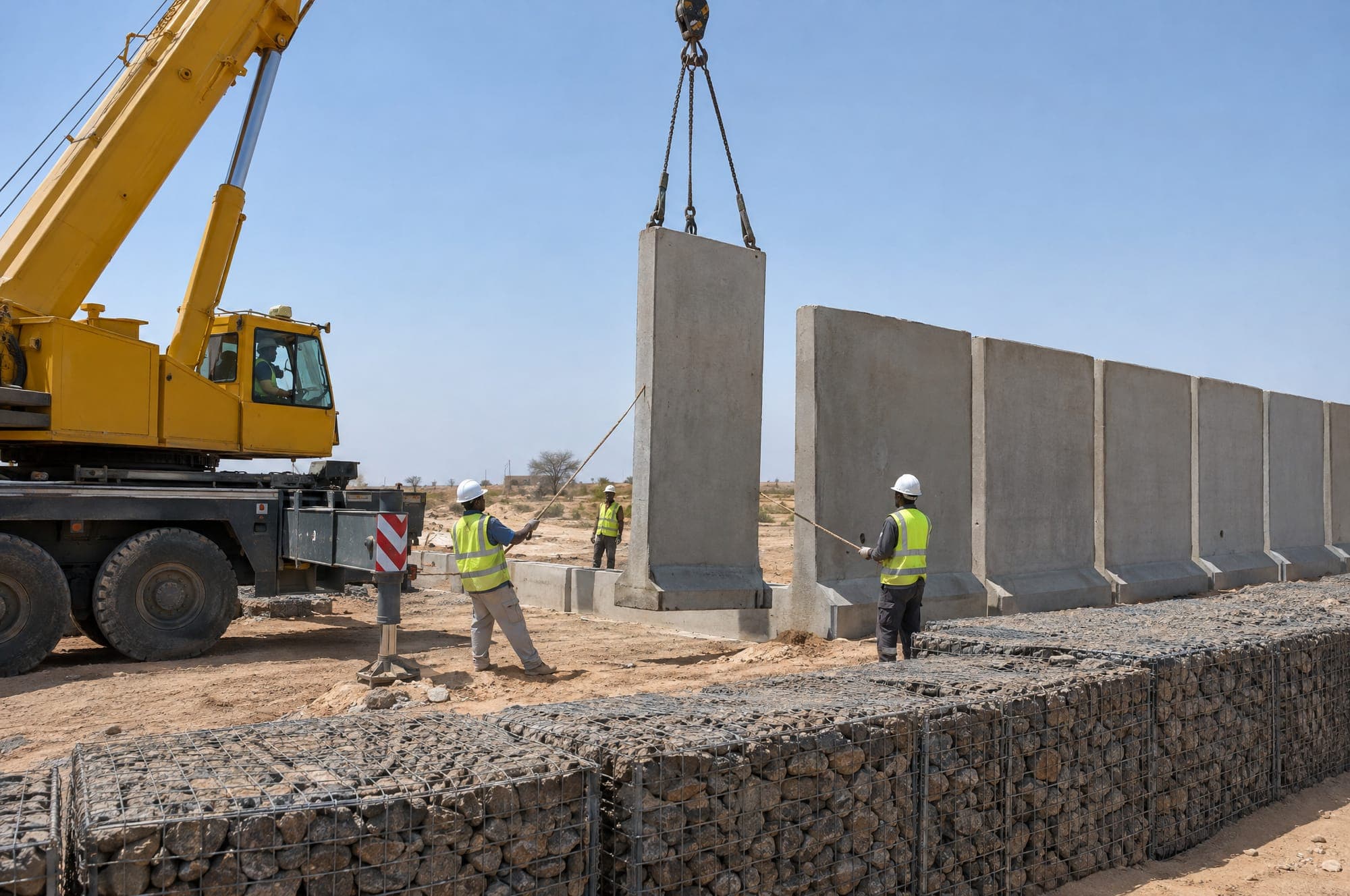
T-walls are precast reinforced concrete barriers that stand on their own base. They are quick to place, can be relocated and give a strong, consistent barrier. Their quality depends on the concrete and reinforcement used to cast them, so they should be produced to an approved design with documented testing, like any other structural concrete.
Placing T-walls needs suitable lifting equipment and a level, compacted base. Mobile cranes or other lifting plant set each unit in position, and the ground beneath must be prepared so the walls stand straight and do not settle unevenly.
HESCO and earth-filled barriers
HESCO-type barriers are wire mesh containers lined with fabric and filled with earth, sand or gravel. They can be built quickly from local fill and are used for perimeter walls, blast protection around buildings and protected positions. Filling them properly needs loaders and compaction, and the fill material has to be suitable and available in the right quantity.
- A compacted, level base to prevent leaning or collapse
- Suitable fill material sourced and stockpiled in advance
- Loaders and compaction equipment sized for the work
- Drainage so water does not collect against the barriers
- Regular inspection and repair after heavy rain
One contract, one site
Protective works use the same resources as the rest of the construction: earthmoving plant, concrete, cranes and trained crews. Delivering them under the same contract as the buildings, roads and utilities keeps one schedule and one chain of command. It also means the perimeter, the gates and the services that pass through them are designed to work together.
Maintenance matters after handover. Barriers can be damaged, fill can wash out, and gates and lighting need servicing. Including these in the facility maintenance plan keeps the perimeter effective for the life of the site.
We build military bases, camps and compounds in Somalia, with protective works such as T-walls and HESCO delivered under the same contract. If you are planning a secure site, our construction team can help you plan the perimeter with the rest of the works.