Insight · Construction
Why on-site batching protects concrete quality
Concrete quality in Somalia depends on control of materials, mixing and delivery. Why producing concrete from our own Mogadishu batching plant matters.
· 3 min read
Concrete is the most widely used material on most construction projects in Somalia, from foundations and frames to roads and hardstanding. It is also one of the easiest to get wrong. Variations in aggregates, water, cement or timing can weaken a structure in ways that are hard to see once the concrete has set. In Mogadishu, producing concrete from a batching plant you control is one of the best ways to protect quality.
Where concrete quality is lost
Problems usually start with inconsistency. Hand-mixed or site-mixed concrete varies from batch to batch, because quantities are measured by volume and water is added by eye. Delays between mixing and placing let concrete begin to stiffen, and extra water is often added to make it workable again, which lowers its strength. High temperatures speed up setting and increase the risk of cracking.
- Aggregates that are dirty, poorly graded or too wet
- Water added on site to improve workability
- Long or unplanned waits between mixing and placing
- Inconsistent measurement of cement and admixtures
- Poor curing in hot, dry and windy conditions
What a batching plant changes
A computer-controlled batching plant weighs each ingredient to the approved mix design and records what went into every batch. That removes most of the variation that comes from manual mixing. Materials can be checked before they are used, and the same mix can be produced day after day across a long program.
Our own batching plant produces concrete to each project's mix design, with documented checks on materials and output. Mix designs are agreed with the client's engineer before production starts. Each batch is recorded and sampled for testing, so every pour can be traced.
Testing and traceability
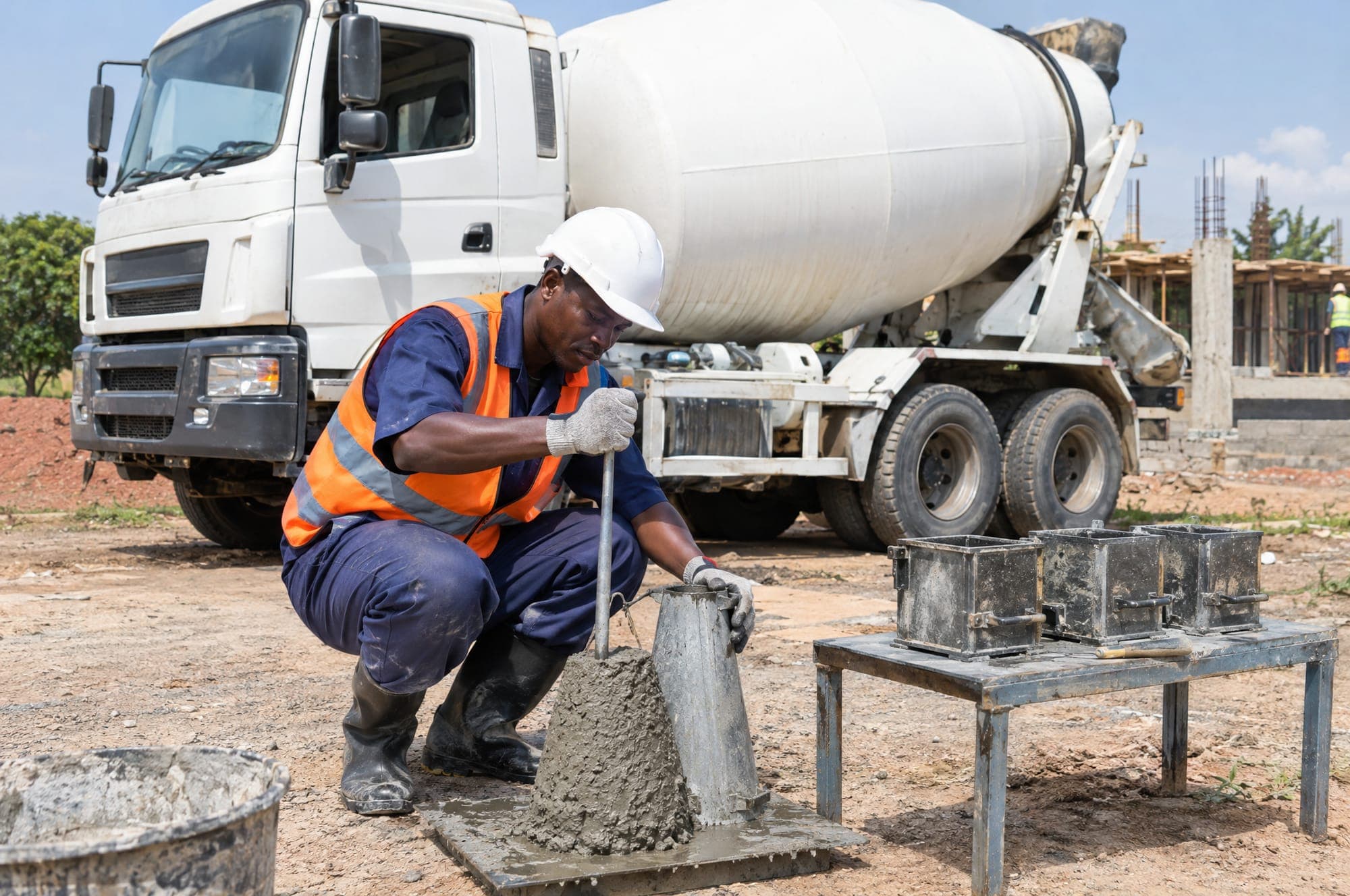
Testing proves that concrete meets the specification. On site, a slump test checks workability before the concrete is placed. Samples are taken to test compressive strength at set ages. Linking these results to batch records means that if a result is low, it is clear which pour it relates to and what action is needed.
For clients and their engineers, this traceability matters. It turns concrete quality from an assumption into a documented fact, which supports acceptance, audit and future maintenance.
Delivery and placement
Good concrete can still be spoiled between the plant and the formwork. Transit mixers keep it moving, and truck-mounted boom pumps place it where the structure needs it. Pours are planned with the batching plant and the site team, so mixers arrive in sequence and the pump is ready when they do. Continuous pours avoid cold joints and keep the work on schedule.
Curing completes the job. In hot conditions, freshly placed concrete must be kept moist and protected from sun and wind long enough to gain strength. A curing plan should be part of every pour plan.
If your project in Somalia needs a reliable concrete supply, our construction team can discuss mix designs, testing and pour planning with your engineer.