Insight · Facility management
Keeping generators running: planned maintenance basics
Generators keep camps and compounds in Somalia running. The planned maintenance basics that prevent failures, from daily checks to fuel quality.
· 3 min read
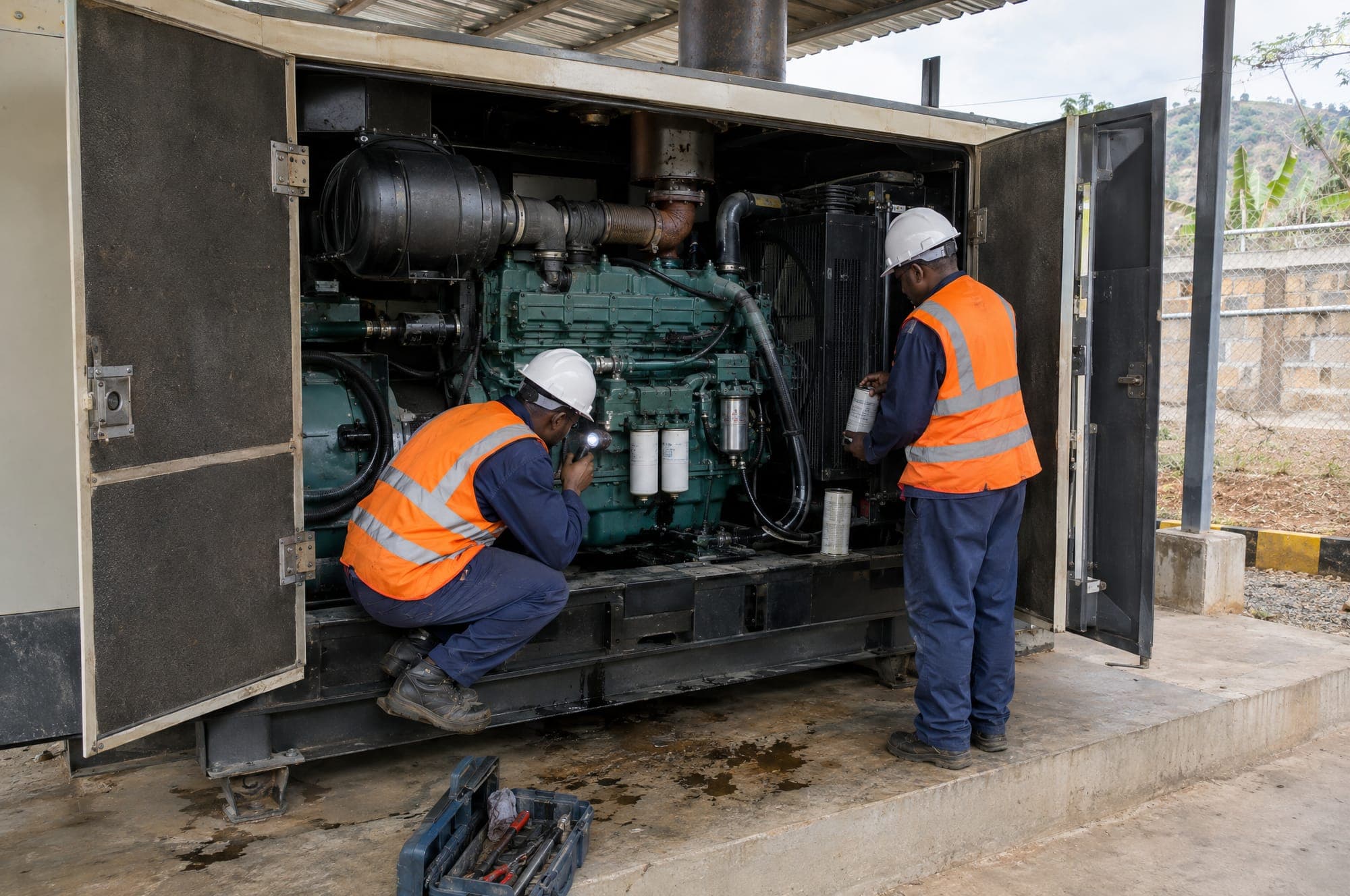
For most compounds, camps and operational bases in Somalia, the generator is the most critical piece of equipment on site. When it stops, so do lighting, water treatment, refrigeration, communications and air conditioning. Most generator failures can be prevented. They come from missed servicing, poor fuel or problems that were visible in daily checks but not acted on.
Daily and weekly checks
Planned maintenance starts with simple routines carried out by trained operators. A short daily check catches most developing problems before they cause a shutdown:
- Oil and coolant levels, and any sign of leaks
- Fuel level, and water or sediment in the fuel
- Battery condition and charger operation
- Air filter condition, especially in dusty conditions
- Unusual noise, vibration, smoke or temperature
- Running hours and load, recorded in the log
These checks take minutes, but only if they are written down. A logbook or maintenance system shows trends, such as rising oil consumption or temperature, that point to a fault before it becomes a failure.
Servicing by running hours
Generators should be serviced at the intervals set by the manufacturer, usually measured in running hours. A typical service includes oil and filter changes, fuel and air filter replacement, belt and hose inspection and a check of the cooling system. Major overhauls follow at longer intervals. On sites that run around the clock, running hours build up quickly, so the service schedule must be planned in advance with parts and technicians ready.
Spare parts are a common weak point. Filters, belts and other consumables should be held on site or nearby, because waiting for parts to be shipped can keep a generator out of service for weeks.
Fuel quality and load
Diesel stored in hot conditions can pick up water and contamination. Fuel should be drawn from clean tanks, filtered and checked regularly. Contaminated fuel damages injectors and pumps, and the repair costs far more than prevention.
Load also matters. Generators that run for long periods at very low load can suffer from carbon build-up. Matching generator size to the actual load, or running units in rotation, keeps them healthier. On larger sites, a standby unit that can take over during servicing or a fault avoids interruptions to power.
Planned, logged and reported
The best maintenance programs are planned, logged and reviewed. A maintenance planning system schedules preventive work and logs every job, so nothing is missed. Reports on running hours, faults and repairs show the client the condition of its power supply and help plan replacements before units reach the end of their life.
Our facility management technicians supply, install, operate and overhaul generators, manage fuel and respond to faults around the clock, and our Mogadishu workshop handles generator overhauls. If you want to review how your site's power is maintained, our team can carry out an asset survey and propose a preventive maintenance plan.