Insight · Facility management
Safe water on remote sites in Somalia
Safe water is basic life support on any remote site in Somalia. How to source, treat, test and store potable water for compounds and camps.
· 3 min read
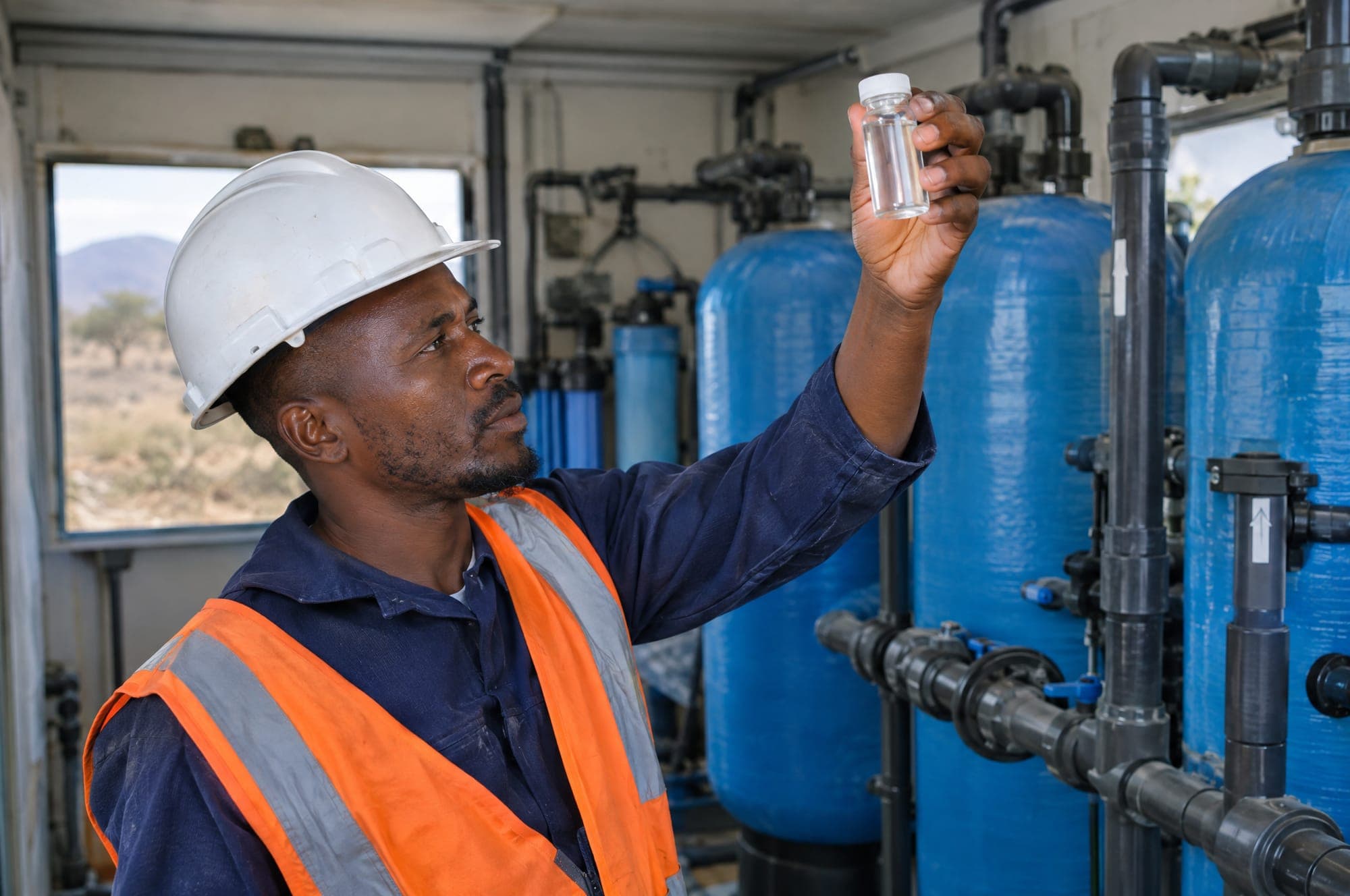
Every remote site in Somalia needs a reliable supply of safe water for drinking, cooking, washing and sanitation. On many sites the source is a borehole, a delivered supply or both, and the water must be treated before it is fit to use. Getting this right protects the health of everyone on site. Getting it wrong can put a whole workforce out of action.
Know your source
Treatment depends on what is in the raw water. Groundwater in the region can be high in salt and minerals, and any source can carry bacteria. Before choosing a treatment method, the raw water should be tested for its physical, chemical and microbiological quality. Testing should be repeated over time, because quality can change with the seasons and with use.
Treatment and storage
A treatment plant typically combines several stages, chosen to match the source. Filtration removes sediment, reverse osmosis or similar processes reduce dissolved salts where needed, and disinfection kills harmful organisms. Treated water then needs clean, covered storage, so that it is not contaminated again before it reaches the tap.
The main elements of a safe water system are:
- Raw water testing to set the treatment needs
- Treatment matched to the source, from filtration to disinfection
- Clean, sealed storage tanks that are inspected and cleaned regularly
- Distribution pipework protected from damage and contamination
- Routine testing of treated water, with results recorded
- A backup supply plan if the plant or source fails
Testing is part of operation
A water plant is only as safe as its last test. Operators should check treated water at set intervals, including disinfectant levels and microbiological quality, and record the results. Any result outside limits should trigger action straight away, from adjusting treatment to stopping supply until the problem is fixed.
Records also matter for clients. A log of tests, maintenance and cleaning shows that the water supply is under control and gives confidence to the people who drink it.
Maintenance and wastewater
Treatment equipment needs regular maintenance. Filters and membranes must be cleaned or replaced, dosing equipment calibrated and pumps serviced. Spare parts should be held on site. A plant that fails without a backup leaves the site relying on bottled water or tanker deliveries.
Wastewater is the other half of the system. Sewage and greywater must be collected and treated or removed so they do not contaminate the water source or the surrounding area.
Our facility management team runs water treatment plants and tests water quality, with results logged for the client, and our water tankers supply compounds, camps and work sites. Marina Hub, our operating base in Mogadishu, has its own water and wastewater treatment. If you need a safe water supply for a site in Somalia, our team can help you plan it.