Insight · Facility management
Solar and hybrid power for camps and compounds
Solar and hybrid power can cut diesel use at camps and compounds in Somalia. What to assess, design and maintain to make it work.
· 3 min read
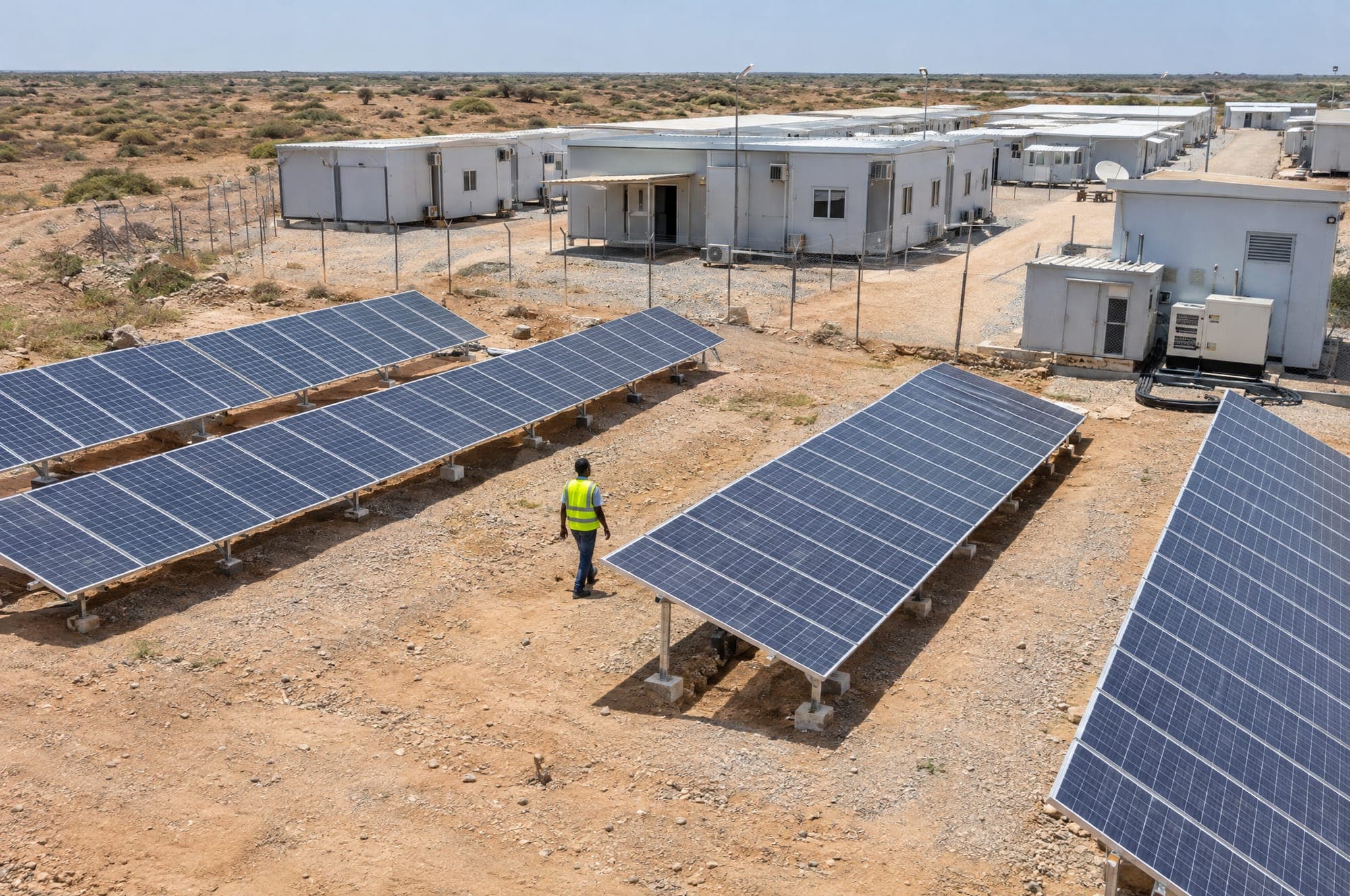
Most camps, compounds and remote sites in Somalia depend on diesel generators for power. Generators are reliable when well maintained, but fuel is costly, supply can be uncertain and every delivery adds a road movement. Solar and hybrid power systems reduce that dependence. Combined with generators, they can lower fuel use and running costs while keeping power available around the clock.
Start with the demand
A good system is sized to the load it serves. Before choosing panels or inverters, the site's energy demand should be measured or estimated in detail: what runs during the day, what runs at night, and where the peaks fall. Accommodation, kitchens, water treatment, workshops and air conditioning all have different patterns. Reducing waste, for example with efficient lighting or better controls, often costs less than adding generating capacity.
Site conditions matter too. Available ground or roof space, shading, wind, dust and security all affect the layout and the type of mounting structure.
Hybrid design
Few sites run on solar alone. A hybrid system combines solar panels, inverters and often battery storage with existing or new generators. The control system decides when to draw on each source, so that solar covers as much daytime load as possible and generators run efficiently when they are needed. Key design points include:
- Matching solar capacity to daytime demand
- Deciding whether battery storage is needed for evening and night loads
- Integrating controls so generators start and stop automatically
- Protecting cabling and equipment from heat, dust and damage
- Allowing space and capacity for future expansion
Installation and commissioning
Installation is a construction task. The ground is prepared and mounting structures are installed, followed by panels, inverters and cabling. Each stage should be inspected, and the full system tested and commissioned before handover. Commissioning confirms that the system produces the expected output and that the controls work with the generators as designed.
Solar water heating is another simple way to cut fuel and power use in accommodation, kitchens and laundries.
Maintenance keeps the savings
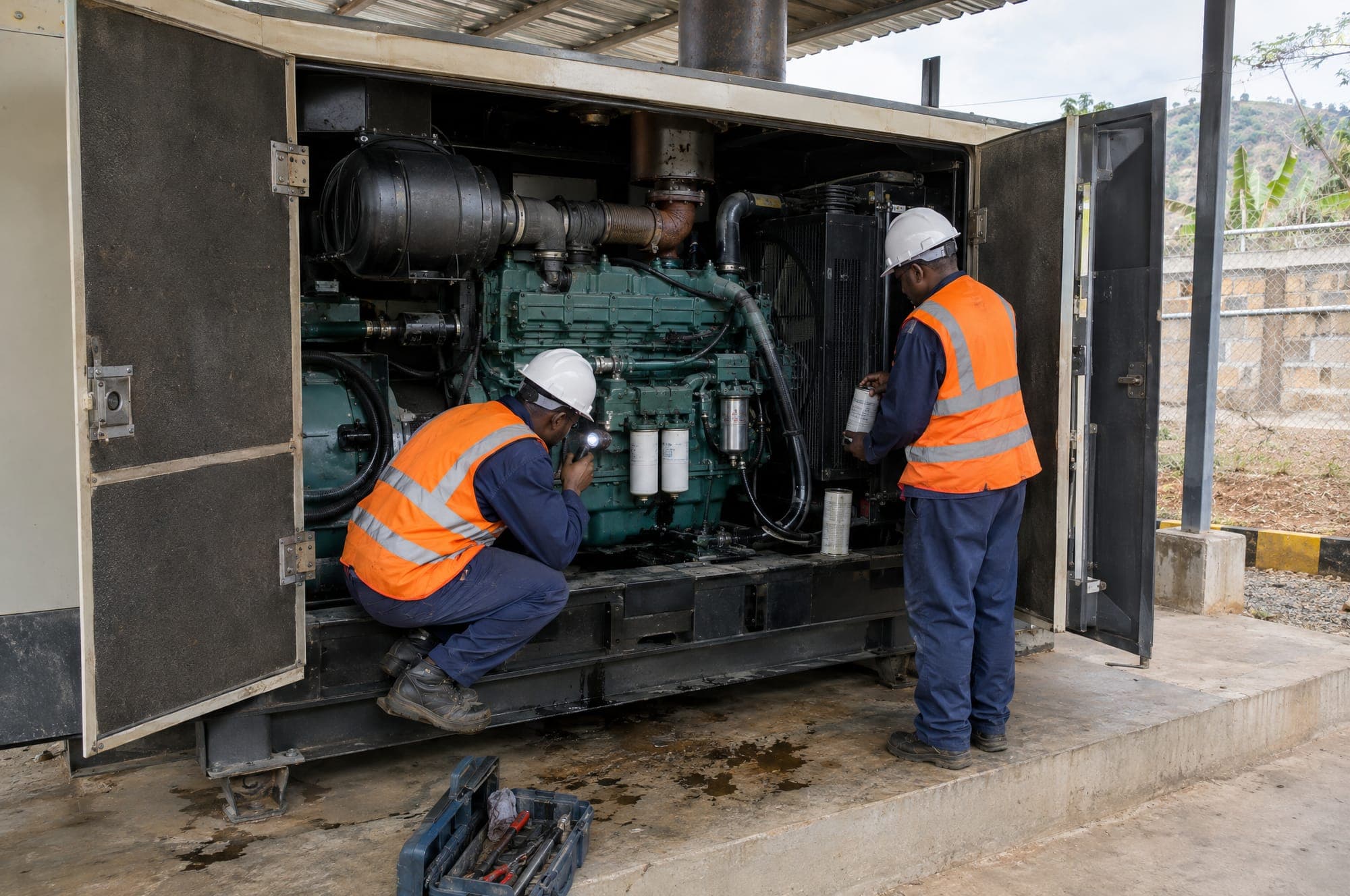
Solar systems need less maintenance than generators, but they are not maintenance-free. Dust reduces panel output, so cleaning should be scheduled. Inverters, batteries and connections should be inspected regularly, and system performance monitored so that any fall in output is noticed early. Generators in a hybrid system still need their own preventive maintenance, even if they run fewer hours.
We have installed solar arrays in Somalia, from site assessment and ground preparation to mounting structures, panels, inverters and cabling, with testing, commissioning and maintenance support after completion. Our facility management teams also supply, operate and maintain generators and run solar water heating. If your site depends on diesel, we can help you assess whether solar or hybrid power would reduce fuel use.