Insight · Government contracting
One contract, one chain of command
Why integrated delivery under one contract helps programs in Somalia: fewer interfaces, clearer accountability and faster response.
· 3 min read
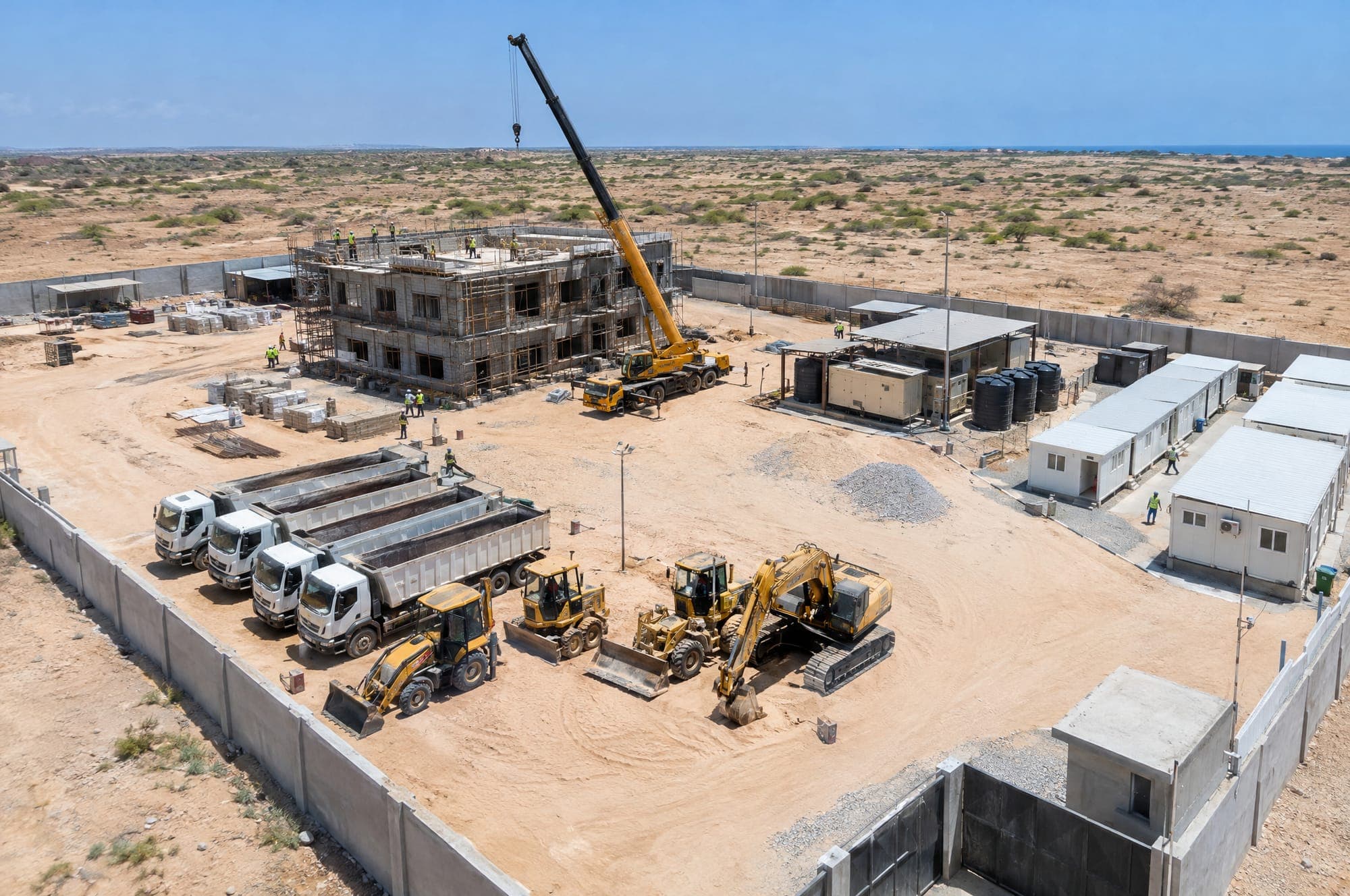
A typical program in Somalia needs more than one kind of support. A new compound may need construction, then power, water and catering, then logistics to keep it supplied, plant and vehicles to keep it moving and a workforce to run it all. Clients can buy each service from a different company, or they can buy them together under one contract. In Mogadishu and across Somalia, the second approach often works better.
The cost of interfaces
Every additional contractor creates an interface. Each interface needs coordination, and each is a place where responsibility can fall between two parties. When the generator fails because fuel did not arrive, is that a facilities problem or a logistics problem? When a building is handed over without the water supply connected, who fixes it? On a remote site, these gaps cost time, and the client's team spends its effort managing contractors instead of running its operation.
What integration changes
With one contract and one chain of command, a single management structure answers for all the services. Problems are resolved inside the team, not argued across contract boundaries. Integrated delivery offers several practical benefits:
- One point of contact and one line of accountability
- Coordinated planning across construction, facilities, logistics, fleet and workforce
- Faster response when one service affects another
- Shared resources, such as plant, workshops and staff, used efficiently
- Consistent HSE and quality standards across every service
- Simpler reporting and contract administration for the client
How it works in practice
Integration works when the provider has one management system, not just one contract. Our delivery model follows four stages. We plan, with a site survey, scope definition, risk assessment and an integrated schedule agreed with the client. We mobilize people, equipment, permits and supply lines before work starts. We deliver through one project management office, with QA/QC hold points, HSE supervision and regular progress reporting. We then sustain the site, operating and maintaining it with service levels, preventive maintenance and performance reviews.
Self-performance is part of this. Our own batching plant, fleet, workshop and workforce in Mogadishu keep the critical resources inside the same chain of command, so schedule control does not depend on outside parties.
When separate contracts make sense
Integration is not always the answer. A client with a strong in-house team may prefer to manage specialist contractors directly, and some scopes need a niche provider. The question to ask is where the interfaces fall and who will manage them. If the client has the capacity to manage them well, separate contracts can work. If not, combining services reduces risk.
Our operating base at Marina Hub in Mogadishu brings workshop, stores, utilities and accommodation together inside one secure perimeter, so equipment, supplies and teams are ready to mobilize across Somalia at short notice. If your program needs more than one kind of support in Somalia, we can show you how our five service lines work under a single contract.