Insight · Logistics
Planning road movements across Somalia
Road haulage in Somalia depends on planning: route, load, timing and security coordinated together for every movement from Mogadishu to regional sites.
· 3 min read
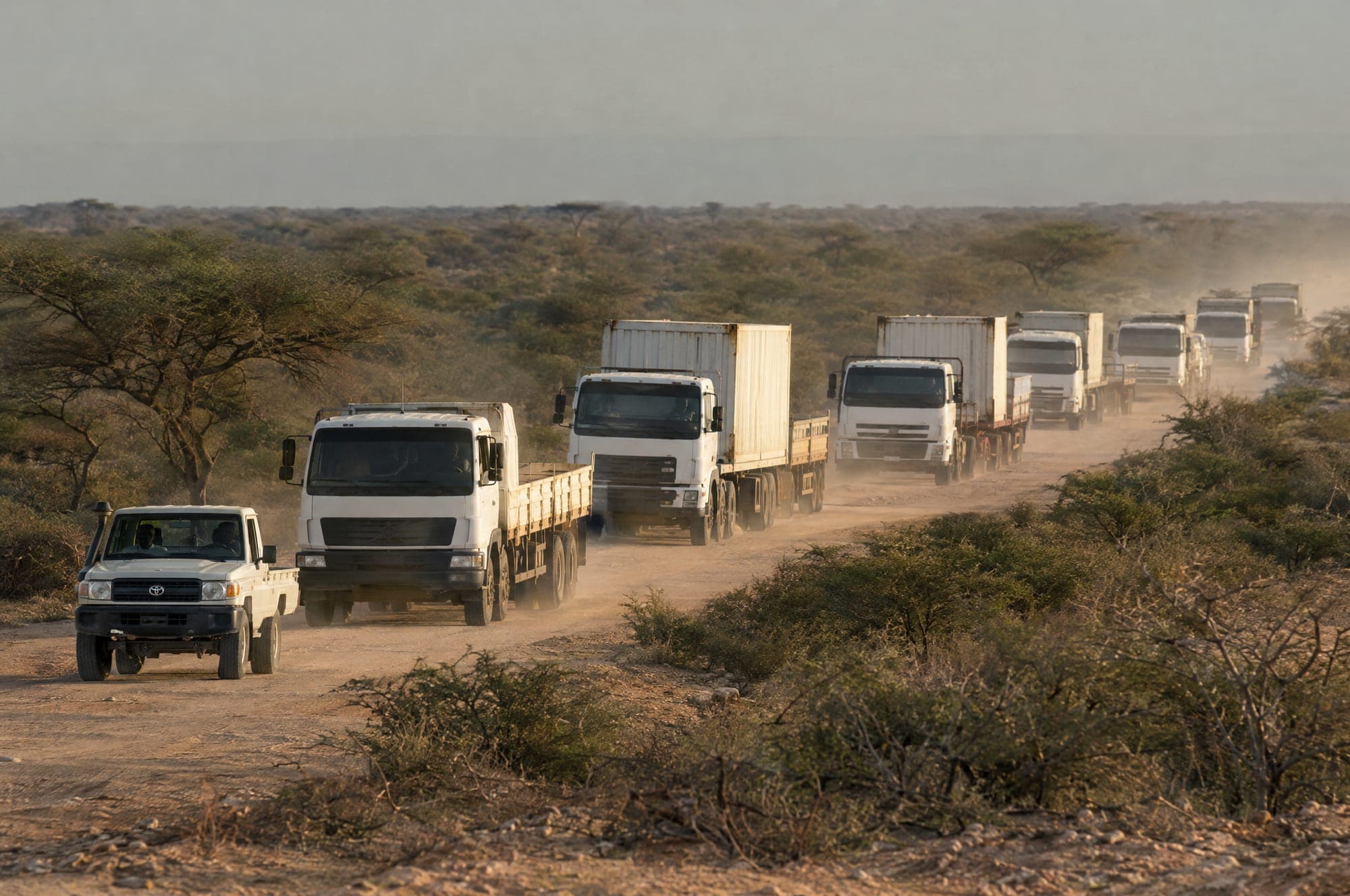
Road transport remains the backbone of logistics across Somalia. Containers leave Mogadishu port by truck, plant moves between sites on low-beds, and water and fuel reach camps by tanker. Each of these movements carries risk, from road conditions to security, and the difference between a smooth delivery and a lost week is usually the quality of the plan made before the truck starts.
Route, load and timing
A good movement plan begins with the route. Road surfaces, bridges, checkpoints and seasonal conditions all change, so a route that worked last month should be checked again before it is used. The rainy seasons can turn unpaved sections into mud, and some routes become impassable for heavy vehicles for days at a time.
The load comes next. Weight, dimensions and securing method decide which trailer is used and which roads it can take. Over-height or over-width cargo may need a different route or a planned stop. Timing ties the two together: departure times should allow arrival in daylight, and convoys should avoid waiting in exposed places.
Security coordination
Many corridors outside Mogadishu carry real risk. Security coordination is part of every movement plan, not an add-on. That means understanding the current situation along the route, agreeing communication and reporting points, and deciding in advance what the convoy does if conditions change. The aim is to reduce exposure: fewer stops, shorter transit time and no unnecessary movements.
A movement plan we would expect to see for any regional delivery covers:
- The route, with alternatives if the first choice is blocked
- Vehicle and trailer type matched to each load
- Departure and arrival windows that keep the convoy moving in daylight
- Security coordination and reporting points along the way
- Driver briefing, vehicle checks and communications before departure
- Delivery and handover arrangements at the receiving site
Vehicles and drivers
Plans only work if the vehicles and drivers do. Trucks should be inspected before every trip, with tires, brakes, lights and load-securing equipment checked and recorded. Drivers need to know the route, the cargo and the reporting procedure. A breakdown on a remote road is more than a delay: it leaves the vehicle, the load and the crew exposed. Preventive maintenance and a pre-departure check reduce that risk more than anything else.
Tracking and reporting close the loop. The client should know when the convoy leaves, where it is, and when the cargo arrives and is signed for. Clear reporting also builds a record that helps plan the next movement on the same route.
Planning your next movement
We run flatbeds, container carriers, low-beds and tankers from Mogadishu to regional sites, with route, load and security planned for each movement. Our work has included movements through high-risk corridors to Baledogle with coordinated security. If you have cargo or plant to move by road in Somalia, our logistics team can help you plan it.