Insight · Facility management
Waste and sewage management that protects public health
How compounds and camps in Somalia can collect, segregate and dispose of waste and sewage safely, protecting residents and neighbors alike.
· 3 min read
Waste and sewage are easy to overlook until something goes wrong. On a compound or camp in Somalia, poor waste management attracts pests, contaminates water and spreads disease, affecting both residents and the community outside the perimeter. Good management protects public health and the environment, and it is one of the basic services every site needs.
Segregate at source
The simplest improvement is to separate waste where it is produced. Different types need different handling, and mixing them makes safe disposal harder. Typical streams on a camp include:
- General waste from accommodation and offices
- Food waste from kitchens and dining facilities
- Recyclable materials such as metal, plastic and cardboard
- Hazardous waste, including oils, batteries and chemicals
- Medical waste where a site has a clinic
- Construction waste from building and maintenance work
Clearly labeled bins, staff training and regular checks make segregation work. Segregation also reduces the volume of waste that needs final disposal.
Collection and disposal
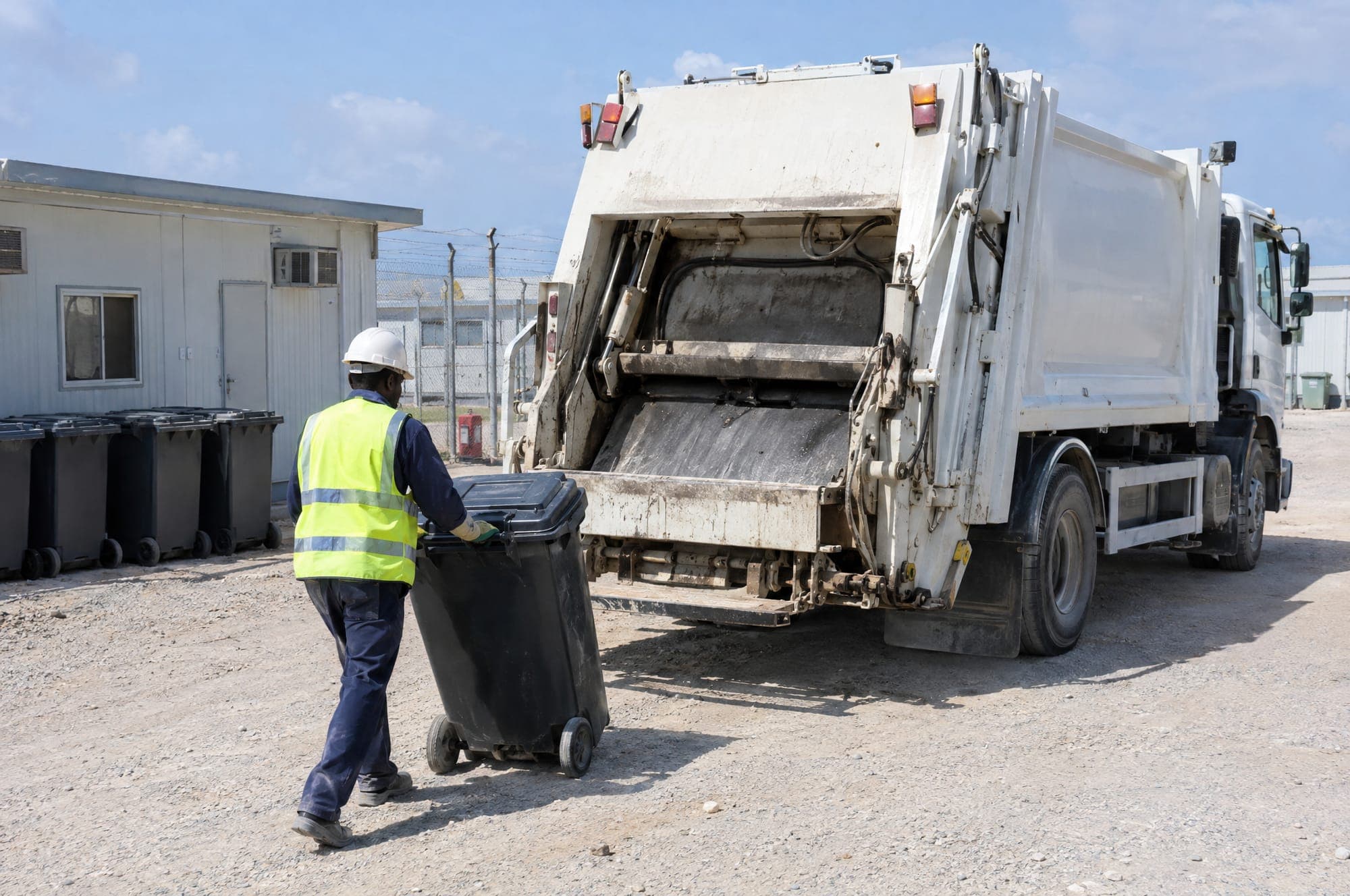
Waste should be collected on a fixed schedule, before bins overflow, and taken to a controlled waste yard or disposal point. Kitchen waste in particular needs frequent removal in hot weather. Hazardous waste must be stored separately, in secure containers, until it can be disposed of by a suitable method.
Incineration is often used on remote sites to reduce the volume of combustible waste. It needs to be operated correctly and away from accommodation, with ash handled safely afterward. Waste oils and other liquids should never be burned in open pits or poured onto the ground.
Sewage and wastewater
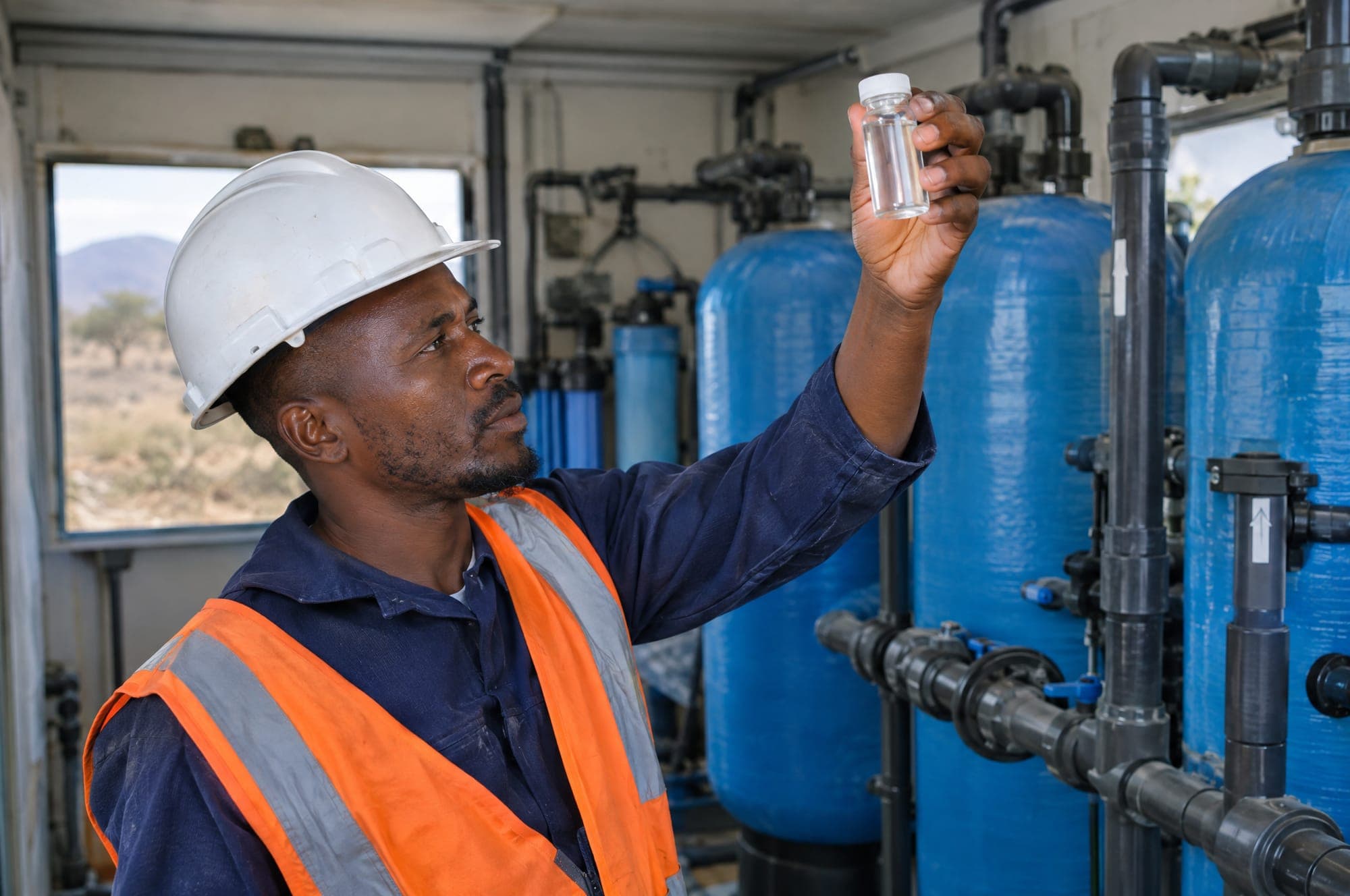
Sewage is a direct public-health risk. Sites without a connection to a municipal system rely on septic tanks, holding tanks or on-site treatment. Tanks must be emptied before they overflow, by vacuum tankers that take the sewage to an approved disposal or treatment point. On-site treatment plants need trained operators and regular testing of the treated effluent.
Drainage should keep wastewater away from water sources, wells and storage tanks. Leaks from pipework or tanks should be repaired quickly, because contamination can spread into the ground unseen.
Pests and records
Pest control goes with waste control. Rats, flies and mosquitoes thrive where waste is left uncovered or water stands. A regular pest control program, combined with clean bins and prompt collection, keeps populations down.
Logs of collections, tank emptying and disposal give the client a record that waste is being handled correctly. Marina Hub, our operating base in Mogadishu, has its own waste yard, incinerator and wastewater treatment.
Our waste and sewage vehicles collect and remove waste from compounds, camps and work sites, with collections logged for the client, and our teams run pest control as part of facility services. If you need to improve waste and sewage handling on a site in Somalia, our facility management team can help.